Protecting Media Freedom in Afghanistan in the Digital Age Findings and Recommendations from the World Press Freedom Day Webinar.
1. Executive Summary:
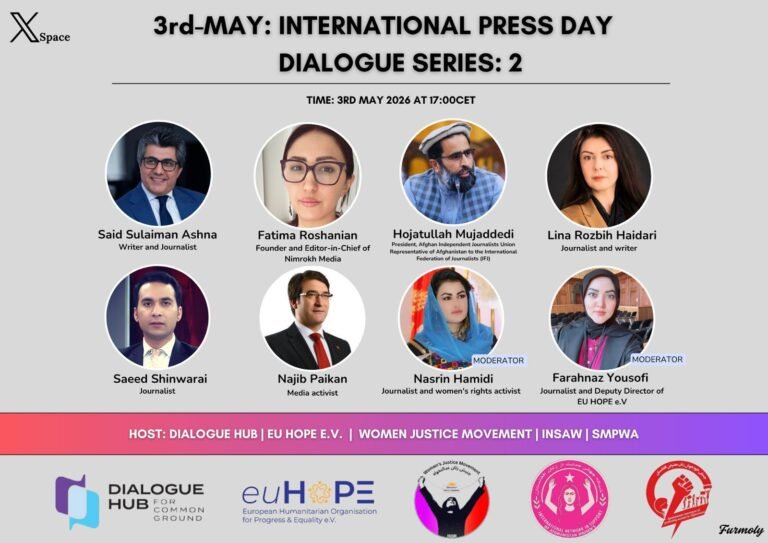
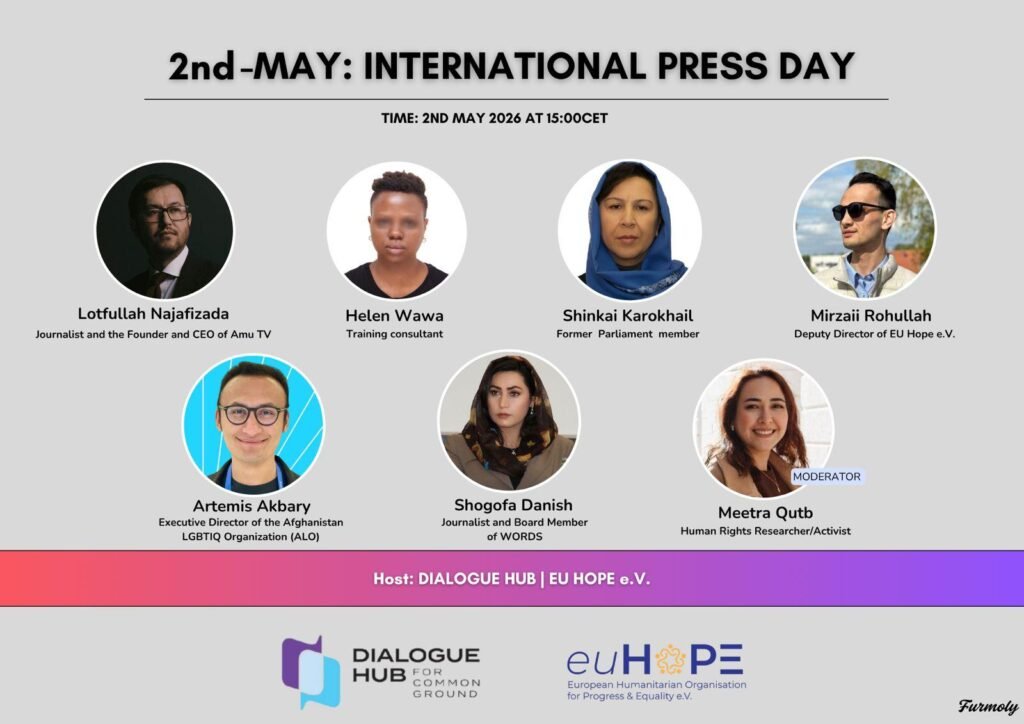
This policy paper is based on a World Press Freedom Day webinar organized by Dialogue Hub for Common Ground and EU Hope, bringing together Afghan journalists, media leaders, and human rights experts.
Since 2021, Afghanistan has experienced a severe collapse in media freedom. According to Reporters Without Borders (RSF), the country now ranks among the lowest globally in press freedom. UN reporting and human rights monitors confirm a dramatic reduction in independent media outlets, with estimates indicating that more than half have closed or relocated and that women journalists have been disproportionately affected, with an estimated decline of over 80% in their participation in media work.
The discussion highlights that censorship in Afghanistan has evolved beyond restriction into systemic invisibility, where women, LGBTQI+ communities, and other marginalized groups are largely removed from public representation. Independent journalism has shifted toward exile and digital platforms, but faces major challenges including funding cuts, surveillance risks, and loss of institutional capacity. At the same time, Afghan journalists continue to demonstrate resilience through cross-border reporting, digital adaptation, and anonymous documentation of human rights violations.
The paper concludes that media freedom must be treated as a core international priority linked to human rights, gender equality, and counter-extremism efforts, and calls for urgent international action through sustained funding, protection mechanisms, and digital security support.
The central conclusion is clear:
Media freedom in Afghanistan is not only a human rights issue, but a foundational condition for social stability, accountability, and countering extremism.