The Taliban’s return to power in Afghanistan in August 2021 marked a severe and unprecedented rollback of human rights, particularly affecting women, girls, and marginalized communities. Since then, Afghanistan has experienced systematic dismantling of legal, political, and social protections that were established over the past two decades.
Following their takeover, the Taliban formed an all-male de facto administration, excluding women entirely from decision-making structures. This exclusion reflects a broader pattern of institutionalized discrimination that defines the current governance system.
The Taliban subsequently suspended the 2004 Constitution and dissolved key democratic and oversight institutions, including the Afghanistan Independent Human Rights Commission (AIHRC), the parliament, and the Ministry of Women’s Affairs. These actions effectively removed accountability mechanisms and eliminated formal avenues for citizen participation.
In addition, the legal framework of the country has been significantly weakened. Critical laws related to media freedom, political participation, and civil liberties have either been suspended or rendered ineffective. Independent legal institutions, including the Afghanistan Independent Bar Association, have also been dismantled, severely restricting access to justice.
Current Human Rights Situation
Since 2021, the Taliban have issued a large number of decrees and directives that regulate daily life. Many of these measures are vague, arbitrary, and enforced without transparency. Women and girls have been disproportionately affected.
Restrictions include:
- Bans on secondary and higher education for girls
- Severe limitations on women’s employment
- Restrictions on freedom of movement without a male guardian
- Exclusion from public and political life
These policies amount to systematic gender discrimination and have been widely described by experts and activists as gender persecution and, increasingly, as gender apartheid.
Women from ethnic and religious minority groups face compounded discrimination, experiencing both gender-based and identity-based exclusion.
Conference Overview
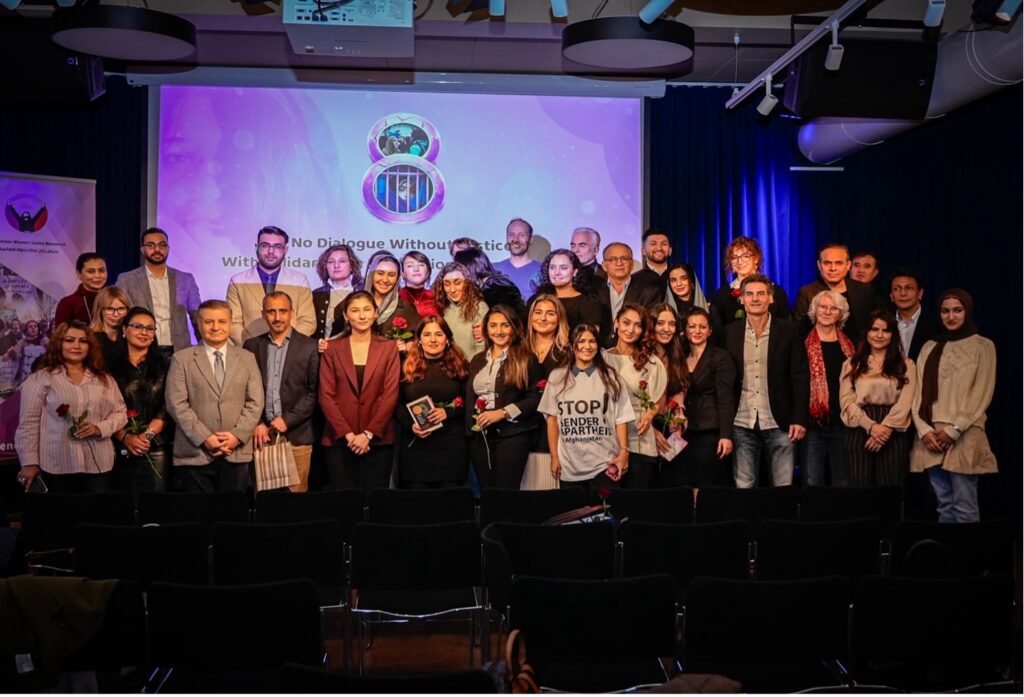
On March 7, 2026, Dialogue Hub for Common Ground and the Afghanistan Women’s Justice Movement (AWJM), organized a high-level conference in Oslo to mark International Women’s Day.
The conference brought together human rights defenders, legal experts, civil society representatives, and members of the Afghan diaspora. The central theme, “From Awareness to Accountability,” focused on advancing the global response from documenting violations toward ensuring justice and accountability.