Your Excellencies:
We write in our collective capacity as Afghan civil society actors, representing the interests of Afghans living under the Taliban regime’s undemocratic rule.
We respectfully urge your Missions, as members of the United Nations Security Council, to act on the ongoing hostilities between Pakistan and the Taliban regime within Afghanistan’s territory. These hostilities have exacerbated significantly since 26 February 2026 and warrant immediate consideration under Chapter VII of the United Nations Charter. The actions of both Pakistan and the Taliban regime have resulted in extensive civilian harm and the erosion of Afghanistan’s territorial integrity, which constitute prima facie violations of Article 2(4) of the UN Charter and present an imminent threat to international peace and security.
We request Your Excellencies’ Missions consider appropriate responsive actions pursuant to Chapter VII of the UN Charter, including:
- A formal determination under Article 39 that the hostilities between Pakistan and the Taliban constitute a threat to international peace and security;
- A demand for the immediate cessation of all cross-border uses of force inconsistent with the United Nations Charter; and
- Measures to ensure accountability and the protection of civilians, in line with international humanitarian and human rights law.
1. Facts
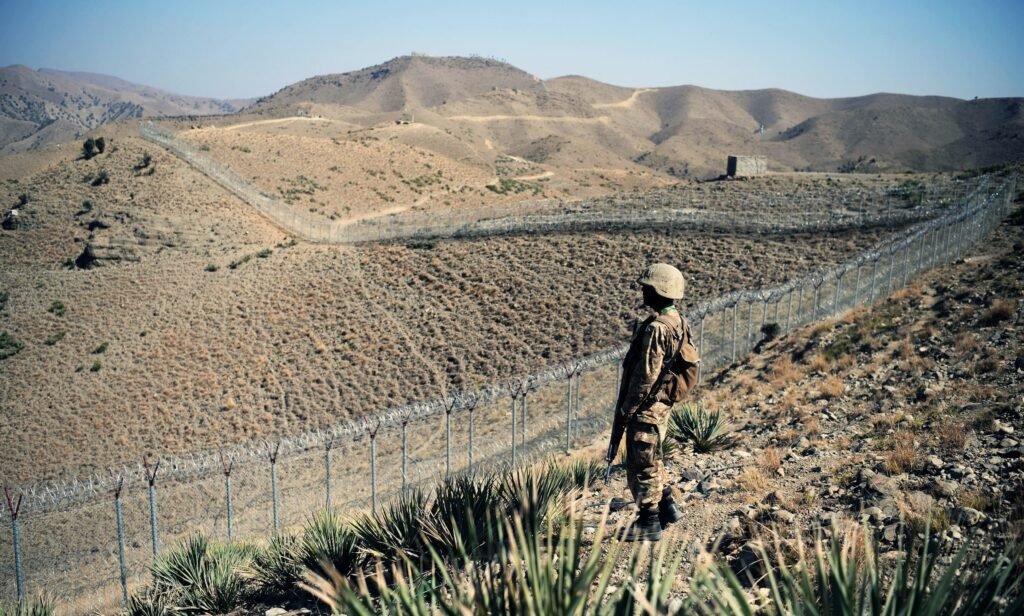
Armed clashes between Pakistan and the Taliban regime have been ongoing since October 2025.i However, the conflict escalated on 26 February 2026, when Pakistan carried out coordinated air and ground strikes on civilian sites in Kabul and Kandahar, as well as in border regions. Officials in Pakistan have claimed that its “open war” with Afghanistan is directed at the Taliban for harbouring the Tehrik-i-Taliban Pakistan (TTP) within Afghanistan’s territory.ii
Since February, airstrikes and clashes have occurred across 10 of Afghanistan’s 34 provinces. There have been at least 289 civilian casualties in Afghanistan since 26 February, with women and children constituting half of all civilian casualties; at least 40,000 people have been internally displaced; and at least 318 shelters and a drug rehabilitation facility in Kabul have been destroyed.iii These attacks have severely compromised the ability of the people of Afghanistan to
realise their basic human rights, including, inter alia, the rights to food, water, shelter, education, and healthcare.
Far from its stated aim of “precisely target[ing] military installations and terrorist support infrastructure,”iv Pakistan’s attacks have exacerbated the already dire humanitarian crisis experienced by the country’s residents. At the same time, the Taliban regime, as the country’s undemocratic de facto authorities, has persistently failed to prevent Afghanistan from being used as a base for cross-border acts of violence, including those that provoke the use of force by other States. Taken together, these actions constitute violations of Article 2(4) of the UN Charter warranting urgent consideration and action by the Security Council.
2. Unlawful Uses of Force by Pakistan and the Taliban Regime as Manifest Violations of Article 2(4) of the United Nations Charter
Article 2(4) of the United Nations Charter expresses a clear prohibition on the threat or use of force against the territorial integrity or political independence of any State.v This prohibition extends not only to direct uses of force, but also to indirect uses of force, including the toleration or support of armed groups operating across borders.
The conduct of the Taliban regime in Afghanistan, in effectively providing a safe haven to the TTP, a non-State armed group engaged in cross-border violence, may constitute a violation of Article 2(4)’s prohibition on indirect uses of force.
We acknowledge that the Taliban regime is not formally recognised as the legitimate government of Afghanistan and does not hold Afghanistan’s seat at the United Nations. However, it is still obliged to uphold the treaties ratified by the State of Afghanistan — whose obligations persist regardless of which authority exercises effective control over its territory — as well as customary international law and peremptory norms of general international law, which apply to effective authorities irrespective of their formal recognition.vi Unlawful uses of force by the Taliban regime, including indirect uses of force, breach all three of these sources of legal obligation.vii
Concurrently, Pakistan’s recent operations in Afghanistan’s territory constitute a prima facie violation of Article 2(4)’s prohibition on direct uses of force.
While Article 51 of the UN Charter preserves the right of self-defence, its invocation is subject to strict conditions of necessity and proportionality,viii and requires that any such measures be immediately reported to the Security Council. We note that the only report made by Pakistan to the Security Council — where Pakistan currently serves as a non-permanent member — was on 9 March 2026,ix and this delay in reporting may, in the words of the ICJ, be a significant factor
“indicating whether the State in question was itself convinced that it was acting in self-defence.”x Beyond this procedural deficiency, Pakistan’s attacks in Afghanistan appear to fail the test of proportionality under Article 51 of the UN Charter and customary international law, which prescribes that the use of force in self-defence must be strictly limited to what is necessary to repel the armed attack and must not cause civilian harm excessive in relation to an anticipated military advantage.xi Strikes on a drug rehabilitation facility in Kabul, the damage and destruction of over 800 civilian homes,xii and the disproportionate casualties among women and children cannot be reconciled with that high threshold.
Accordingly, both Pakistan’s so-called “open war” within the territory of Afghanistan, and the Taliban regime’s acquiescence in the use of Afghanistan’s territory by non-State actors for cross-border attacks, constitute violations of the prohibition embodied in Article 2(4) of the UN Charter. This violation of Afghanistan’s sovereignty and territorial integrity amounts to a serious breach of international legal norms designed to maintain peace and stability among nations, and thus falls directly within the mandate of the Security Council under Article 39 of the UN Charter.
3. Chapter VII Competency
Under Article 39 of the United Nations Charter, the Security Council is empowered to “determine the existence of any threat to the peace, breach of the peace, or act of aggression.” The Security Council has previously determined that “the deliberate targeting of civilian populations or other protected persons and the committing of systematic, flagrant and widespread violations of international humanitarian and human rights law in situations of armed conflict may constitute a threat to international peace and security.”xiii The uses of force by Pakistan and by the Taliban regime, coupled with their considerable humanitarian impact and potential for escalation and regional destabilisation, provide a sufficient basis for such a determination.
We urge your Missions to support referral of this matter to the Security Council for consideration under Chapter VII. The situation engages the Council’s core mandate: the prohibition on the use of force, the protection of civilians, and the maintenance of international peace and security. The actions requested in this letter — a formal Article 39 determination, a demand for cessation of unlawful uses of force, and accountability measures for civilian harm — follow directly from that mandate and the analysis set out above. Such actions would not only address the immediate situation, but also reaffirm the commitment of your Missions and the Security Council as a whole in upholding the foundational principles of the UN Charter.
4. Conclusion and Signatures
The people of Afghanistan continue to suffer from a profound humanitarian crisis, which is stoked by ongoing instability and conflict. Any further escalation risks deepening this suffering and undermining prospects for long-term peace and security in Afghanistan and across the region.
The urgency of this appeal is compounded by the governance vacuum that presently exists in Afghanistan. The Taliban regime is not domestically or internationally recognised as Afghanistan’s legitimate government; it has not been admitted to the United Nations as such; and it does not represent the Afghan people in any democratic sense. Under these conditions, Afghan civil society is prepared to represent the people of Afghanistan, and the Security Council bears a heightened obligation to engage with it.
We therefore respectfully call upon your Missions to give this matter the urgent attention it deserves and to act decisively in your capacity as Security Council members under Chapter VII of the UN Charter. Violations of Article 2(4) by both Pakistan and the Taliban regime, the devastating humanitarian consequences for Afghan civilians, and the real risk of regional escalation together demand a principled and timely response.
We remain at your disposal to provide further information or documentation as may assist in your deliberations. We thank you for your consideration of this matter.
*Signatories on following page*
i See “Report of the Secretary-General: The situation in Afghanistan and its implications for international peace and
security” A/80/658-S/2026/99, 27 February 2026.
ii See Timor Sharan, “From Patron to Predator: Pakistan Turns on its Afghan Clients” Madras Courier, 18 March 2026, accessed at: https://madrascourier.com/opinion/from-patron-to-predator-pakistan-turns-on-its-afghan-clients/. iii “Afghanistan Situation Update #2: Humanitarian Impact of Afghanistan-Pakistan Military Escalation (18 March 2026)” Organization for Coordination of Humanitarian Relief, accessed at: https://www.unocha.org/publications/report/afghanistan/afghanistan-situation-update-2-humanitarian-impact- afghanistan-pakistan-military-escalation-18-march-2026; see also “UNAMA statement on an airstrike on a medical facility in Kabul” UNAMA, 17 March 2026, accessed at: https://unama.unmissions.org/en/press-releases/unama- statement-airstrike-medical-facility-kabul.
iv Yama Bariz and Simon Fraser, “Pakistan air strike kills at least 100 at Kabul drug rehab centre” BBC News, 17
March 2026, accessed at: https://www.bbc.com/news/articles/c4g8n7e0l40o.
v Military and Paramilitary Activities in and against Nicaragua (Jurisdiction and Admissibility) [1984] ICJ Rep 392, para 73; [1986] ICJ Rep 14, paras 187–190 and 292 (4), (6).
vi See “Situation of human rights in Afghanistan: Report of the Special Rapporteur on the situation of human rights in Afghanistan” A/HRC/55/80 (23 February 2024), paras. 3-4.
vii See Olivier Corten and Vaios Koutroulis, “The Jus Cogens Status of the Prohibition on the Use of Force” in Dire Tladi (ed), Peremptory Norms of General International Law (Jus Cogens) (Brill Nijhoff 2021), 629; Accordance with International Law of the Unilateral Declaration of Independence in Respect of Kosovo (Advisory Opinion) [2010] ICJ Rep 403, para. 80; see also Armed Activities on the Territory of the Congo (Democratic Republic of the Congo v. Uganda) (Judgment on Merits) [2005] ICJ Rep 168, paras 162-165, 205-220.
viii See Judith Gardam, Necessity, Proportionality and the Use of Force by States (CUP 2004); Military and Paramilitary Activities in and against Nicaragua (Nicaragua v United States of America) [1986] ICJ Rep 14 at paras. 194 and 237; Oil Platforms (Islamic Republic of Iran v United States of America) [2003] ICJ Rep 161 at paras. 43, 51, and 73–77; Armed Activities on the Territory of the Congo (Democratic Republic of the Congo v Uganda) [2005] ICJ Rep 168 at para. 147; Legality of the Threat or Use of Nuclear Weapons (Advisory Opinion) [2005] ICJ Rep 226 at para. 41.
ix “Statement by Ambassador Asim Iftikhar Ahmad, Permanent Representative of Pakistan to the UN, at the meeting of the UN Security Council on the situation in Afghanistan (9 March 2026)” Permanent Mission of Pakistan to the United Nations in New York, 9 March 2026, accessed at: https://pakun.org/official-statements/03092026-01.
x Military and Paramilitary Activities in and against Nicaragua (Nicaragua v United States of America) [1986] ICJ Rep 14 at para. 200; Georg Nolte and Albrecht Randelzhofer, “Article 51” in Bruno Simma et al (eds), The Charter of the United Nations: A Commentary (OUP 2012, vol. 2) at p. 1425; D.W. Greig, “Self-Defence and the Security Council: What Does Article 51 Require?” (1991) 40:2 International and Comparative Law Review 366.
xi See Terry D Gill and Dieter Fleck, “Legal Basis of the Right of Self-Defence Under the UN Charter and Under Customary International Law” in The Handbook of the International Law of Military Operations (OUP 2015, 2nd ed) 213.
xii “Afghanistan-Pakistan: Civilians paying highest price for escalating conflict” Norwegian Refugee Council, 13 March 2026, accessed at: https://www.nrc.no/news/2026/afghanistan-pakistan-civilians-paying-highest-price-for- escalating-conflict.
xiii UNSC Res 1296 (19 April 2000) UN Doc S/RES/1296; UNSC Res 1674 (28 April 2006) UN Doc S/RES/1674;
UNSC Res 1738 (23 December 2006) UN Doc S/RES/1738; UNSC Res 1894 (11 November 2009) S/RES/1894.
- Human Rights Defenders Plus (HRD+)
- Afghanistan Democracy and Development Organisation (ADDO)
- Civil Society and Human Rights Network (CSHRN)
- Afghanistan Media Support Organization (AMSO)
- Women Organization for Rights, Dignity and Speech (WORDS)
- Women’s Justice Movement (WJM)
- Dialogue Hub for Common Ground
- EU HOPE e.V.
- Window for Hope
- Afghan Women Peace and Freedom Organization (AWPFO)
- Noor Educational and Capacity Building Organization (NECDO)
- Afghan Women Coordination Umbrella (AWCU)
- Afghanistan Studies & Cooperation Center e.V (ASCC)
- Far Flicks AB
- Mawoud Academy
- Fekresabz Organization (FSO)
- Afghanistan Canada Culture (ACC)
- The United Afghan Women’s Movement Freedom
- Afghanistan Women’s New Future Movement
- Generation Positive Organization (G+)
- Shahrwand Social and Legal Research Organisation
- Farkhunda Movement
- Tolo-e-Azaadi
- Afghanistan’s Powerful Women’s Movement
- Independent Coalition of Afghanistan Women’s Protest Movement
- Afghanistan Freedom Struggle Network
- Women Yell Movement
- Balkh Women’s Movement
- Global Campaign Against Gender Apartheid
- Free People Movement in Exile
- Network of Afghan Women in Urban Governance
- Afghan Women News Agency
- Generation of Peace
- Association of Women Radio and Television (AWRT-K Afghanistan Chapter)
- Education Defenders Network (EDN) – Canada
- Afghanistan Women’s Political Participation Network
- Tabesam Cultural and Social Services Institute
- Afghanistan Women’s Solidarity Movement
- Afghanistan Women’s Organization for Equality
- Alternative Links for Training and Development
- Stichting voor Afghanistan (SVA)
- Rahe Madanyat Daily (RMD)
- Free Watch Afghanistan Organization (FWA)
- Herat Citizens’ Social Association
- Peace and Human Rights Dialogue Center
- Afghan human rights Defenders in Exile (AHRDE)
- National Anti-Discrimination Process(NADP)
- AWA Legal and Social Foundation
- Civil Society and Human Rights Activists Network
- North Opposition Women’s Movement
- Institutions of Civil Society and Human Rights in Afghanistan (ICSHRA)
- Patriot Education and Vocational Organization (PEVO)
- Afghan Canadian Civil Society Forum
- Azady- Digital Civil Society Institute
- Research and Advocacy Organization for Development (RAOD)
- Rawzana Omid Social Organization
- Fallah Social Institution
- World Organization against Torture (OMCT)
- Organization for Policy Research and Development Studies (DROPS)